Support us now
We love music, but love doesn't pay the rent. Join the crew that empowers the next generation of artists. Become part of Super-Sonic Support, so we can support upcoming talent.
We love music, but love doesn't pay the rent. Join the crew that empowers the next generation of artists. Become part of Super-Sonic Support, so we can support upcoming talent.
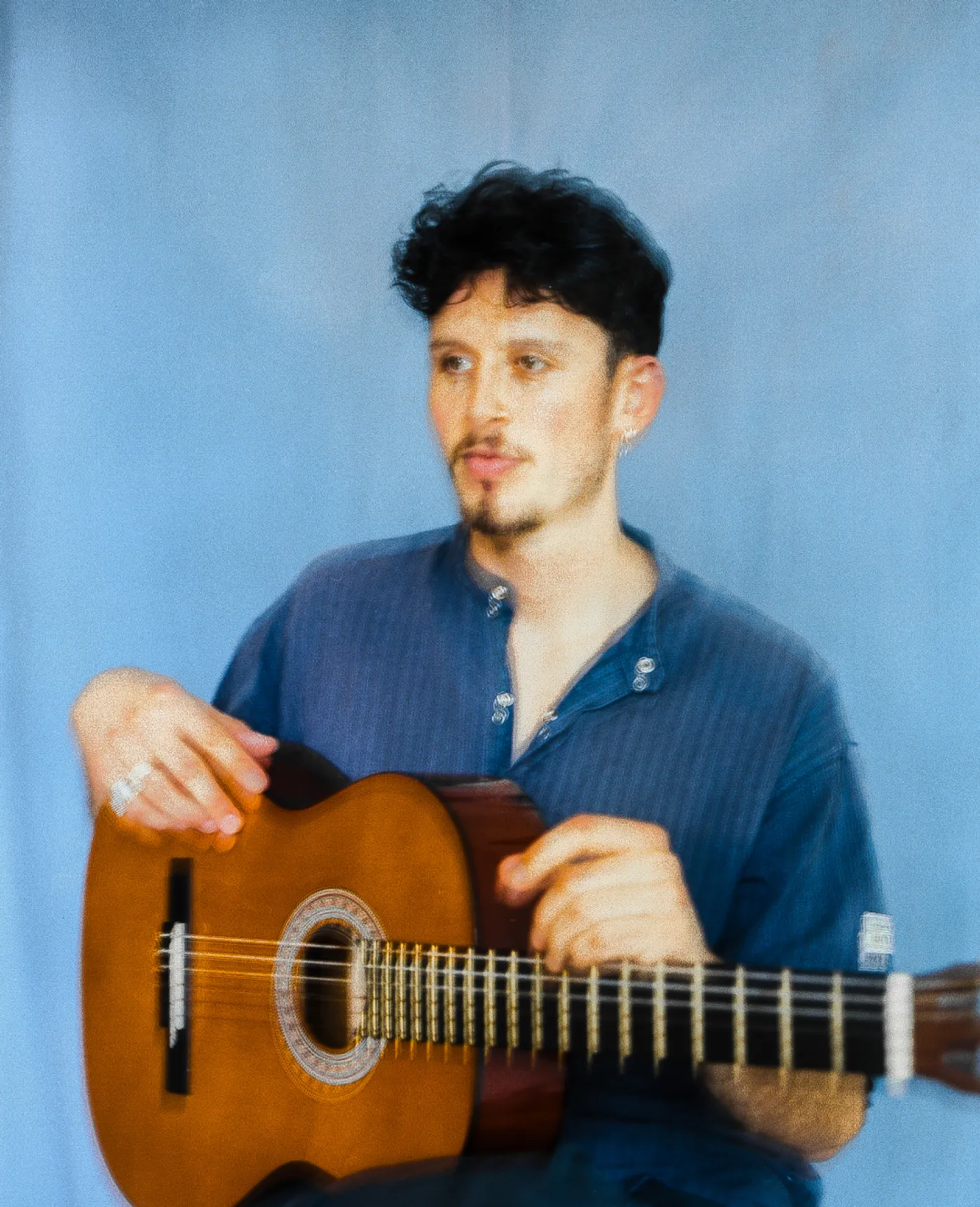
On July 3rd, Maurice Vincent will present his debut album ‘The Echoes Within’ during a listening session at murmur. Ahead of the event, we spoke with the artist about how spending time in silence transformed his approach to music, as well as the inspirations and creative process behind the record.
The album was created over years of exploration and recording, drawing from classical guitar, Brazilian traditions, spiritual jazz, and a deep attention to the rhythms of nature. The music unfolds as an invitation to return to the present, to reconnect, and to experience sound as something that echoes both inward and outward.
Of course! The Echoes Within is the result of a period of introspection and personal transformation. After many years of being involved in music in many ways, I gradually felt the need to slow down, turn more inward, and reconnect with myself and music differently. I naturally started spending more time in silence. Around that same time, I began approaching music differently, less as performance and more as a form of personal reflection, almost like a meditative practice.
Over the years, I became deeply interested in certain musical traditions and spent years exploring new music, while at the same time immersing myself in other fields like psychology. I was constantly playing, reading, and studying. Eventually, that curiosity led me not only to study music, but also clinical psychology and become a therapist. Slowly, I began creating more space for stillness and developing a different way of relating to myself and the world around me.
During that same period, I became more aware of all the traces, or “echoes,” as I started calling them, that experiences had quietly left behind within me. Through the people I met, relationships, memories, musical inspirations, and certain places or atmospheres that continued to resonate over time, these inner echoes slowly became the main inspiration behind this body of work. It often felt as though the harmonies and melodies were already there, and I simply had to become quiet enough to listen to what was slowly revealing itself, and translate those discoveries into sound. That is where The Echoes Within was born.
This album became my way of reconnecting with my inner world and translating those experiences into sound. Over time, the process slowly became a way of rediscovering myself, learning to let go, and understanding certain parts of myself more deeply. It almost felt like a form of therapy unfolding through music. It never really felt like I was ‘making’ songs. It felt more like I was uncovering something that was already there.
What moved me most throughout this process was bringing so many people together around something that felt deeply personal to me. A lot of this music was born in solitude. And then, suddenly, I found myself sitting in a room at Abbey Road Studios, surrounded by incredibly talented musicians, friends, and creatives, each bringing their own presence to the music. Seeing that inner world slowly come to life felt incredibly special to me.
Many of the people on this album are not only incredible musicians but also close friends who have slowly become part of this journey over time. Because we allowed the music to evolve naturally, everything was approached with much care, patience, and attention. Sometimes we would literally spend hours searching for the emotional weight of a single movement within the string arrangements, the space between instruments, the intention or texture of a certain sound, or the way the strings dissolve beneath a melody.
The album was intentionally recorded in a very organic way. That was always my intention. You can hear fingers touching strings, room sound, breath, and subtle imperfections throughout the record. We kept many of those moments in because they carried something deeply human to me. I never wanted the music to feel perfect, I wanted it to feel alive.
There were definitely moments during the recordings where I had to pause and take in what was happening. These compositions started as something deeply personal that I mostly experienced alone, and slowly became something shared between all of us. For me, that’s one of the beautiful things music can do: it creates a connection between people. Throughout this process, it allowed us to understand and feel each other in ways that sometimes went beyond words.
For me, music and psychology feel connected because both revolve around slowing down, attention, and listening. The experiences we go through in life leave impressions within us, and making music for me often feels like giving shape to those experiences. Maybe that’s also why music can feel so personal sometimes, when you recognize parts of your own experience in someone else’s expression.
In my work as a psychologist, I notice a very similar process. A lot of therapy is about carefully listening to what someone is carrying beneath the surface — patterns, tensions, emotions, or protective mechanisms shaped over many years. By slowing down and creating enough safety and attention, people gradually become more aware of themselves and the ways their experiences continue to shape their lives. In that sense, both music and therapy ask for sensitivity and deep listening.
I sometimes feel that in music I play an instrument, while in therapy I try to be fully present for someone else. Through music, sound can express things that are difficult to put into words. In therapy, attention and reflection often help people become more aware of what they are feeling and carrying. Both are ultimately about listening carefully and creating enough space for something honest to emerge.
Meeting Fabiano do Nascimento definitely inspired me, both musically and personally. Beyond being an incredible musician, I really appreciated the calmness and sincerity with which he approaches music and life. We spent a few days together during his tour in the Netherlands, and over time our conversations became just as meaningful as the music itself.
We spoke a lot about music, spirituality, and life in general, but there was also a lot of humor and lightness in the way we connected. What makes our friendship special to me is our shared curiosity for the deeper stories and cultural roots behind the music. As you might know, Fabiano do Nascimento comes from Rio de Janeiro. Through our conversations, I discovered deeper layers of Brazilian and Afro-Brazilian traditions, like Candomblé, which gave me a lot of inspiration and admiration for the history, devotion, and ancestral wisdom that can be carried through music.
His album Lendas even became the soundtrack to that entire period of my life. Deeply inspiring music. If you haven’t listened to it yet, I really recommend it.
For me, something people might not immediately realise is how organic and alive the album actually is. Everything was recorded acoustically, so what you hear comes from real wooden instruments and real physical resonance. We tried to keep the recordings as pure as possible, without relying on effects or artificial textures. For me, that gives the album a certain warmth and liveliness that you can feel, even if you don’t immediately realise why.
Another thing that feels special to me is the scale of collaboration behind this project. Close to a hundred people contributed to the album in some way. There’s an orchestral ensemble, a full choir, a complete rhythm section, and many different musicians woven throughout the record. Some of them are close friends, others I met along the way, but everyone brought something personal into the music.
And in a way, the album also takes place within nature. Over the years, I would often make field recordings while traveling or simply spending time outside — birds, water, wind, jungle sounds, and distant atmospheres, and many of those recordings subtly found their way into the music. Because of that, the album slowly became a kind of dialogue between people, instruments, and the natural world around us. For me, it became a way of paying homage to nature, the places I travelled to throughout the years, and the feeling of being connected to something larger than myself.
For me, this album mainly resonates as a reflection of a very personal period in my life. I never really felt the need to rush creating it. For many years, I was mostly observing, supporting, and learning from other musicians, and I became deeply fascinated by people who were able to express something truly honest and personal through music. At a certain point, it simply felt important for me to begin searching for that within myself as well, not from ambition, but more from curiosity and inner necessity.
This album became part of that process. A way of turning inward and slowly trying to understand what I genuinely wanted to express or contribute through music. I feel like a lot of that personal reflection already lives inside the work itself now. Making this album helped me enormously. It gave shape to emotions, questions, and experiences that were often difficult to put into words otherwise. More than anything, I feel grateful that it exists now. Grateful that I can return to it years from now and remember who I was becoming during these formative years of my life, and which experiences shaped me along the way. In that sense, the album became a kind of documentation of that process — almost like a rite of passage. Something I can keep returning to, listening back to, and reconnecting with over time.
And outwardly, I believe a lot of meaning, healing, and connection can be found through shared reflection and honest expression. So if this album can resonate with someone, support them, or simply help them feel more connected to themselves or to others, I think that would be something very beautiful. At the same time, the core intention behind this music has always been deeply personal to me. I never made this album purely to arrive somewhere externally, but from a genuine inner need to create and express something honest. The process itself already carried a lot of meaning for me, and the fact that I can now share it with others feels very special.
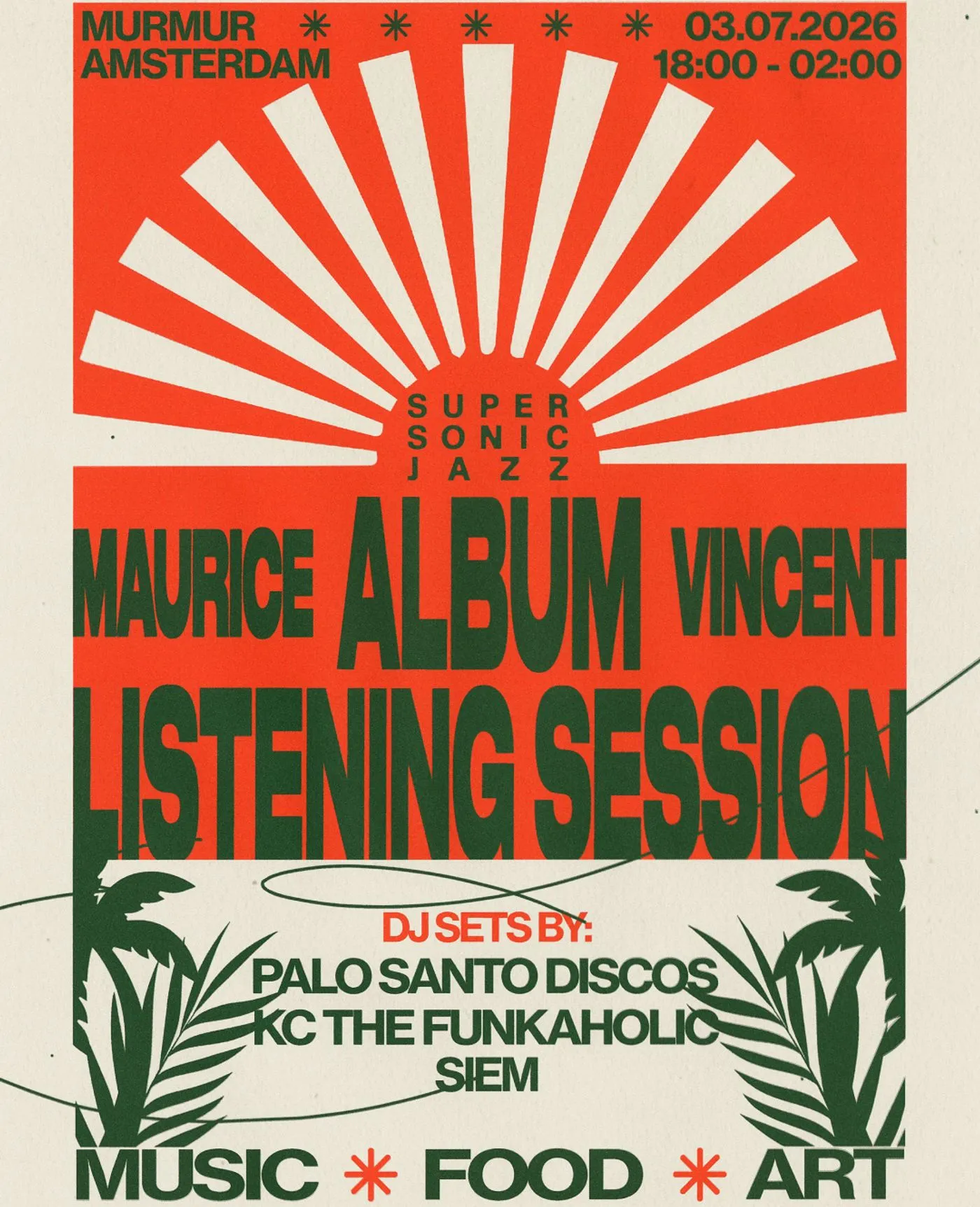
On July 3, Maurice Vincent presents his debut album ‘The Echoes Within’ during a one-off listening session at Murmur. Recorded with an orchestral ensemble and full choir at Abbey Road Studios Amsterdam, the album carries a warm and organic sound. During this session, the full work will be presented as intended, as one continuous piece, offering a first encounter in its most intimate form.
Murmur will be serving delicious food throughout the evening. After the listening session, the night continues with DJ sets by Palo Santo Discos, KC The Funkaholic, and Siem. The album carries a warm and organic sound. During this listening session, the full work will be presented as one continuous piece, offering a first encounter in its most intimate form.